Computer Modelling of Sound
The ability to model a sound field accurate is fundamental to the understanding of the underlying characteristics of the sound and how the sound can be manipulated and controlled. The advance of computational technology, both in hardware and software, has enabled us to make great progresses in modelling ever more sophisticated sound fields in realistic indoor and outdoor environments.
The impact of works in this area can be seen in the design of acoustic performance spaces such as studios, concert halls and soundscapes in urban design; the development of novel and high performance acoustic materials such as sonic cloaks and active absorbers; and more effective control of noise such as novel noise barriers, metal cladding with high noise insulation, and active noise shielding technology.
At Salford we continue to be at the forefront of developing new techniques for modelling and sound, and the use of such modelling techniques to tackle pertinent practical acoustical and related problems. We have developed and used a wide range of numerical techniques for computer modelling, including (among others) geometrical methods, boundary element methods, finite element methods, finite difference methods, parabolic equation methods, and combinations thereof.
As examples, we recently had a research project funded by the UK Engineering and Physical Science Research Council (EPSRC) to develop a hybrid boundary element method to take advantage of the efficiency of asymptotic geometrical approximation in a full-wave boundary element formulation. Other projects have used computer modelling techniques to underpin the study of future spatial audio rendering in homes and other challenging environments, such as in an EPSRC funded Programme Grant with partners from the BBC, University of Surrey and University of Southampton.
The followings are examples of our current and previous works in this area and selected publications.
Boundary Element Modelling
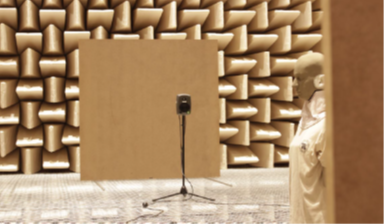
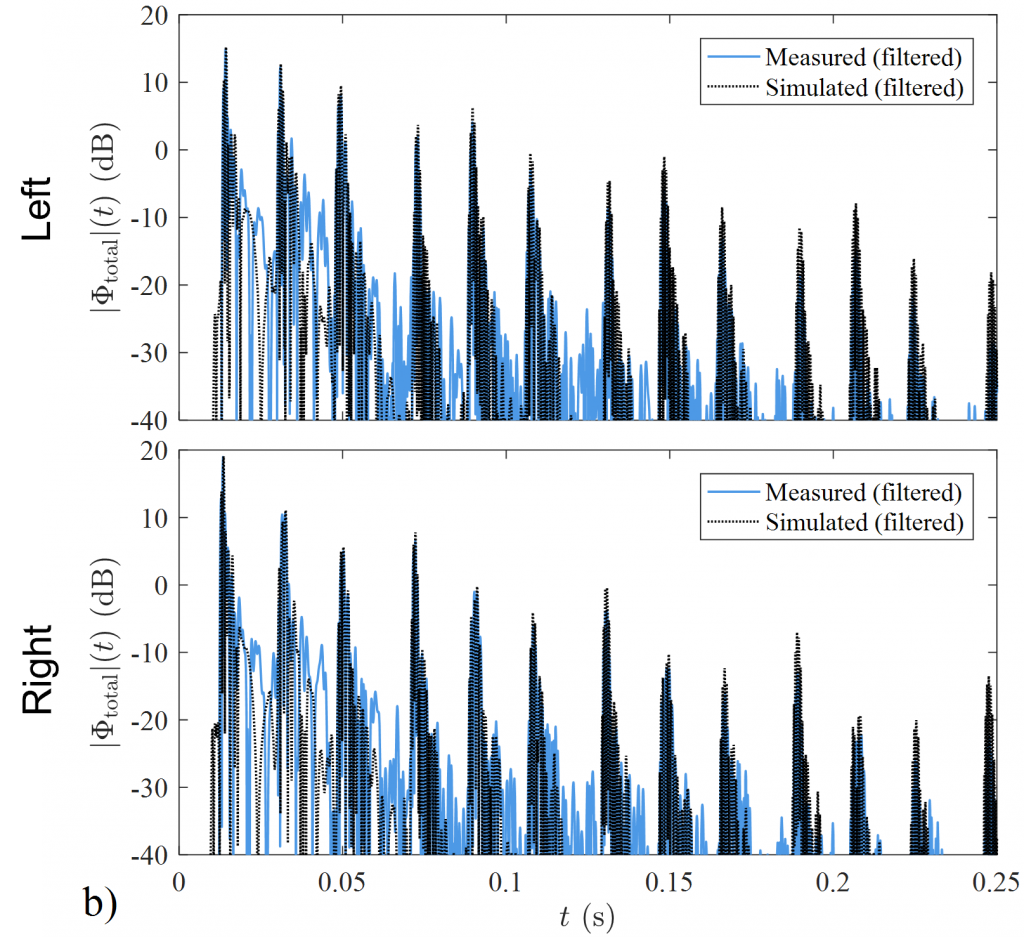
- Cicero, A, and Hargreaves, J. A., A Boundary Element Method (BEM) solver for low frequency room modes, in: Proc. Internoise 2022.
- Petrolli, R, D’Antonio, P, Storyk, J, Hargreaves, J.A. and Betcke, T, Non-cuboid iterative room optimizer , in: Forum Acusticum, 7th – 11th Dec 2020
- Hargreaves, J.A., Rendell, L.R. and Lam, Y.W. ‘A framework for auralization of boundary element method simulations including source and receiver directivity’, The Journal of the Acoustical Society of America, 145 (4) , pp. 2625-2637. 2019.
- Hargreaves, J.A. , Lam, Y.W. and Langdon, S. ‘A transformation approach for efficient evaluation of oscillatory surface integrals arising in three-dimensional boundary element methods’, International Journal for Numerical Methods in Engineering, 108 (2) , pp. 93-115, 2016.
- Lam Y. W., “A boundary integral formulation for the prediction of acoustic scattering from periodic structures”, J. Acous. Soc. Am. 105(2), p.762-769, 1999.
- Lam Y. W., “A boundary element method for the calculation of noise barrier insertion loss in the presence of atmospheric turbulence”, Applied Acoustics 65(6), pp. 583-603, 2004.
- Lam Y. W., Hargreaves J.A., “Time domain modelling of room acoustics”, Keynote Speech, Proc. of Acoustics 2012, Nantes, France, pp.595-605, April 2012.
- Hargreaves J. A., Lam Y. W., “Towards a Full-Bandwidth Numerical Acoustic Model”, Proc. ICA2013, paper 4aAA1, Montreal, June 2013.
Geometrical Room Acoustics Modelling
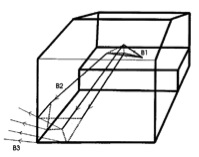
- Emthyas, A, and Hargreaves, JA, Raytracing in galerkin boundary integral form, in: Proc. Internoise 2022
- Lam Y. W., “Issues for Computer Modelling of Room Acoustics in Non-Concert Hall Settings”, Acoust. Sci. & Tech. 26(2), pp.145-155, 2005.
- Drumm I. A. and Lam Y. W., “The adaptive beam tracing algorithm”, J. Acous. Soc. Am. 107(3), pp.1405-1412, 2000.
- Lam Y.W., “The dependence of diffusion parameters in a room acoustics prediction model on auditorium sizes and shapes”, J. Acous. Soc. Am. 100(4), p.2193-2203, 1996
- Lam Y.W., “A comparison of three diffuse reflection modelling methods used in room acoustics computer models”, J. Acous. Soc. Am. 100(4), p.2181-2192, 1996
Synergies between Wave and Geometrical Simulation
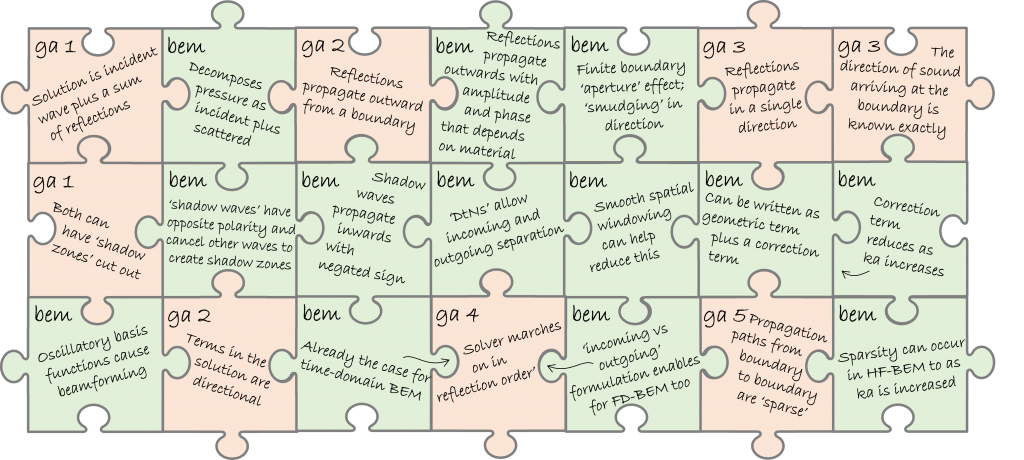
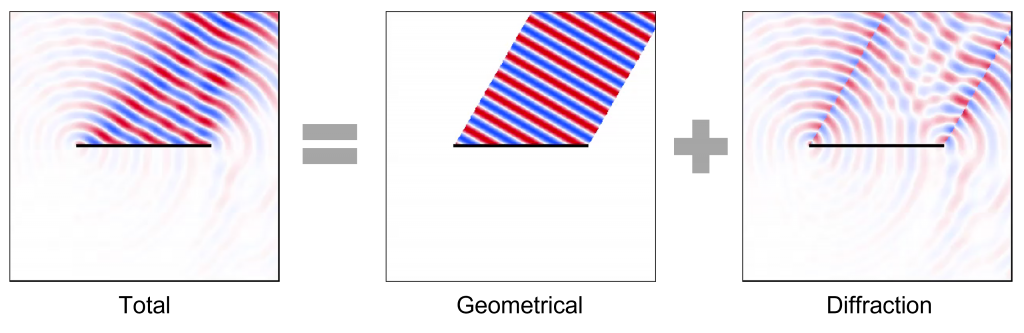
- Hargreaves, JA. A comparison between the high-frequency boundary element method and surface-based geometrical acoustics, in: Proc. Internoise 2022 (presentation here)
- Hargreaves, JA and Lam, YW 2019, ‘The wave-matching boundary integral equation – an energy approach to Galerkin BEM for acoustic wave propagation problems’ , Wave Motion, 87 , pp. 4-36.
- Hargreaves, JA and Lam, YW 2014, ‘An energy interpretation of the Kirchhoff-Helmholtz boundary integral equation and its application to Sound Field synthesis’ , Acta Acustica united with Acustica, 100 (5) , pp. 912-920.
Time Domain Boundary Element Modelling
- Hargreaves, J. (2011). Simulating transient scattering from obstacles with frequency-dependent surface impedance. In Forum Acusticum (pp. 229–234). Aalborg. http://usir.salford.ac.uk/19382/
- Hargreaves, J., & Cox, T. (2009). A transient boundary element method for acoustic scattering from mixed regular and thin rigid bodies. Acta Acustica United With Acustica, 95(4), 678–689. Retrieved from http://usir.salford.ac.uk/14082/
- Hargreaves, J. A, & Cox, T. J. (2008). A transient boundary element method model of Schroeder diffuser scattering using well mouth impedance. The Journal of the Acoustical Society of America, 124(5), 2942–51. http://usir.salford.ac.uk/14625/
Finite Element Modelling
- Macdonald, L, Oclee-Brown, JA, and Hargreaves, J.A. Metric Based Development of Acoustic Lenses And Waveguides, in: Reproduced Sounds 2022
- Macdonald, L and Hargreaves, J.A. Investigation into the effects of the geometry in cone driven midrange horns & phase plugs , in: Reproduced Sounds 2020
- Hedges M. J. D. and Lam Y. W., “Accuracy of Fully Coupled Loudspeaker Simulation Using COMSOL”, Proc. COMSOL User Conference, Milan (2009).
- Kelly L., Lam Y. W., Avis M., ‘The significance of coupling in 3D modelling of acoustic wave propagation in a cavity containing air and porous absorbent’, Proc. COMSOL User Conference, Birmingham (2006)
Finite Difference Time Domain Modelling
- Sheaffer, J & Walstijn, M V & Fazenda, B 2014, ‘Physical and numerical constraints in source modeling for finite difference simulation of room acoustics’, Journal of the Acoustical Society of America, 135(1), pp.251-261.
- J. Sheaffer, C.J. Webb and B.M. Fazenda. Modelling binaural receivers in finite difference simulation of room acoustics. In: Proceedings of the 21st International Congress on Acoustics (ICA 2013), June 6–12, 2013.
- Jeong H. and Lam Y. W., “Source implementation to eliminate low-frequency artifacts in finite difference time domain room acoustic simulation”, J. Acoust. Soc. Am. 131(1): 258–268 (2012).
- Lam Y. W., Jeong H., “Source and boundary modeling in FDTD for room acoustics”, Internoise 2011, Osaka, Sept 2011.
- Jeong H. and Lam Y. W., “FDTD modelling of frequency dependent boundary conditions for room acoustics”, Proc. 20th International Congress on Acoustics, Paper 488, Sydney, Aug. 2010.
- Drumm I., Lam Y. W., “Development and assessment of a finite difference time domain room acoustic prediction model that uses hall data in popular formats”, Proc. Internoise 2007, Paper IN07_022, Istanbul, August 2007.
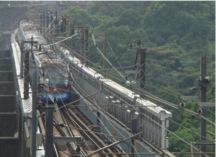
Click the image to play ‘Echo Bridge Reflections’ – a simulation of how the sound bounces around under Echo Bridge in Newton Upper Falls, Massachusetts. Simulation done by Jonathan Sheaffer, a PhD student at the University of Salford.
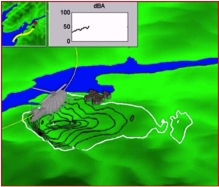
Modelling for Outdoor Sound Propagation
- Hargreaves, J. A, Kendrick, P. K. & Von-Hunerbein, S. Simulating acoustic scattering from atmospheric temperature fluctuations using a k-space method, J. Acoust. Soc. Am., 124(5) pp. 82-92, 2014.
- Lam Y. W. “An analytical model for turbulence scattered rays in the shadow zone for outdoor sound propagation calculation”, J. Acoust. Soc. Am., 125(3), pp.1340-1350, 2009.
- Lam Y. W., “The significance of temperature gradient on the propagation of noise to high rise buildings in urban cities”, Paper in08_0337, Proc. Internoise 2008, 26-29 October 2008, Shanghai, China.
- Lam Y. W., Monazzam M. R., “On the modelling of sound propagation over multi-impedance discontinuities using semi-empirical diffraction formulations”, J. Acoust. Soc. Am. 120(2), pp.686-698, 2006.
- Munt R M, Browne R W, Simpson C, Bradley S, Lam Y W, Kerry G, Beaman R, “Environmental Noise Modelling for UK Military Helicopter Training Operations”, Proc. Of American Helicopter Society 59th Forum, 2003.
- Lam Y. W., “Ground and Meteorological Effects on Sound Propagation in the Atmosphere – Predictions and Measurements”, International Journal of Acoustics and Vibration Vol. 5(3), pp.135-139, 2000.
Modelling for Acoustical Materials
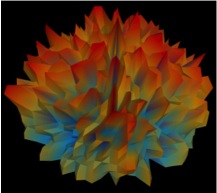
- Steele, K and Hargreaves, JA, A time method version of the transfer matrix method , in: Acoustics 2021
- Esposito, A, Hargreaves, J.A. , Romano, R.A. and Cicero, A 2020, Measurement of the elastic modulus of homogeneous materials by a bending wave speed method , in: Forum Acusticum, 7th – 11th Dec 2020
- Hargreaves, JA 2019, Acquisition of bi-directional reflectance functions by Nearfield Acoustical Holography – a preliminary study , in: Proc. ICA 2019, (presentation here)
- Monazzam M. R. and Lam Y. W., “Performance of Profiled Single Noise Barriers Covered with Quadratic Residue Diffusers”, Applied Acoustics 66, pp.709-730, 2005.
- Lam Y.W., “The noise transmission through profiled metal cladding, part iii: double skin SRI prediction”, Journal of Building Acoustics Vol.2(2), p.403-417, 1996.
- Cox T.J., Lam Y.W., “Prediction and evaluation of the scattering from quadratic residue diffusers”, J. Acous. Soc. Am. 95(1), pp.297-305, 1994.
Modelling of Active Noise Control & Direct Field Acoustic Testing
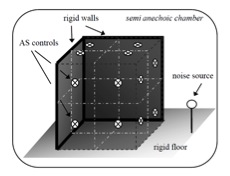
- Hargreaves, JA, Analysis and control of acoustic modes in cylindrical cavities with application to Direct Field Acoustic Noise (DFAN) testing , in: Proc. Internoise 2022
- Lam Y. W., Utyuzhnikov S. V., Kelly L., “Difference potential based active noise shielding in three dimensional settings”, J. Acoust. Soc. Am. 131, 3380 (2012).
- Lim H., Utyuzhnikov S. V., Lam Y. W., and Turan A., “Multi-domain active sound control and noise shielding”, J.Acous.Soc.Am. 129(2), 717-725 (2011).
- Lim H., Lam Y. W., Utyuzhnikov S. V., Turan A., “Realization of the Difference Potential Method in Active Noise Control”, WESPAC 2006, 26-18 June, 2006, Seoul, South Korea.