Speaker: Sarah Armstrong
Wednesday 14th October 12-1pm UK time in Newton 241 or on Teams via this link.
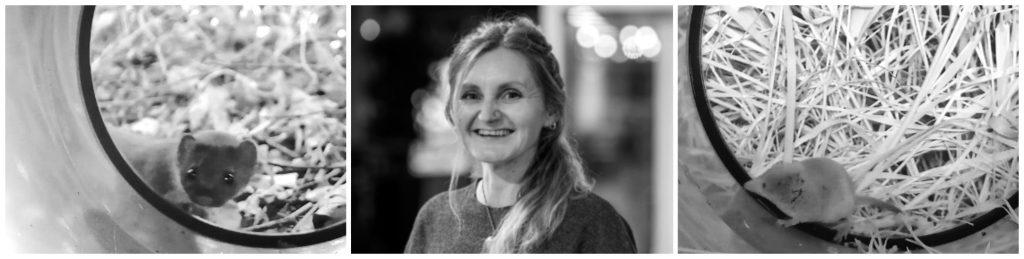
Abstract
Noise is a pervasive pollutant with well-documented impacts on wildlife, both individuals and populations. Despite this, UK noise and environmental policy rely on anthropocentric metrics and thresholds that do not consider non-human differences in hearing sensitivities, ecology, or activity patterns. Small mammals play important roles in terrestrial ecosystems but remain comparatively underrepresented in noise pollution research. This project investigates how short-term anthropogenic noise disturbances, such as music festivals, affect small mammal communities, while trialling novel, ecologically relevant approaches to measuring noise exposure.
Passive acoustic monitoring (PAM) and camera trapping assess species presence, vocalisations, activity patterns, and behavioural responses before, during, and after noise disturbances. Acoustic data will incorporate frequencies beyond the human hearing range, including ultrasound, and consider nocturnal activity patterns and available species-specific hearing abilities. Sound recordings will also be manipulated to create more realistic visual representations of how noise is experienced by small mammals within their habitats. It is expected that species and taxa more reliant on acoustic communication, such as shrews, may show stronger responses to noise, whereas species relying more on olfactory cues, such as voles, may be less affected. In the longer term, findings will contribute to the development of a noise impact prediction toolkit. The toolkit will integrate species traits, hearing sensitivities ecology, acoustic characteristics, and temporal patterns to estimate likely impacts of proposed noise disturbances. It is hoped the toolkit will complement existing practices, but provide a non-human focused, user-friendly resource for environmental impact assessments and inform more species-sensitive approaches to noise management.
Speaker Biography
Sarah is a second-year PhD student with the EPSRC Sustainable Sound Futures Centre for Doctoral Training studying at the University of Salford following an undergraduate degree in Biology and masters in Animal Behaviour. Sarah’s project focuses on developing a toolkit for practitioner use which better predicts the impacts of noise and noise pollution on terrestrial small mammals. Sarah worked lecturing on undergraduate zoo management and wildlife courses and was a zookeeper and animal rehabilitator prior to that, still volunteering for various wildlife groups. Sarah is supervised by Professor Trevor Cox (Acoustics Research Centre) and Dr Helen Whitehead (Environmental Research and Innovation Centre)