Speaker: Dr Josef Schlittenlacher, University College London
Wed 11th February 12:00 – 13:00 UK time. This seminar will be held in person in Newton 241 and online via Microsoft Teams.
Abstract
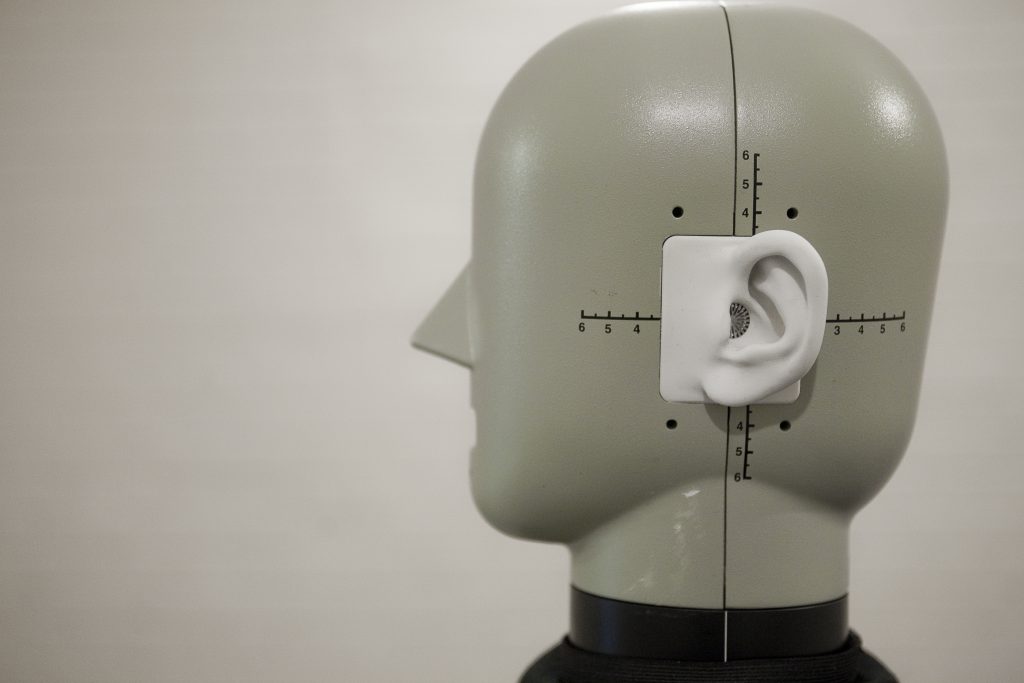
This talk provides an overview of loudness models and key experimental findings, from the classic work of Fletcher and Munson to the latest ISO 532-3 standard, including ongoing research on loudness perception in background noise. Loudness models predict perceived loudness for the average human listener far more accurately than the metrics commonly used in noise regulation. This improved accuracy arises because loudness models account not only for sound intensity and frequency weighting, but also for perceptual effects such as spectral summation, binaural summation, and temporal integration. In particular, the ability to predict partial loudness – representing the loudness of a sound in the presence of background noise – makes it possible to evaluate and design sounds as they are actually perceived in real-world environments rather than under idealized laboratory conditions.
Biography
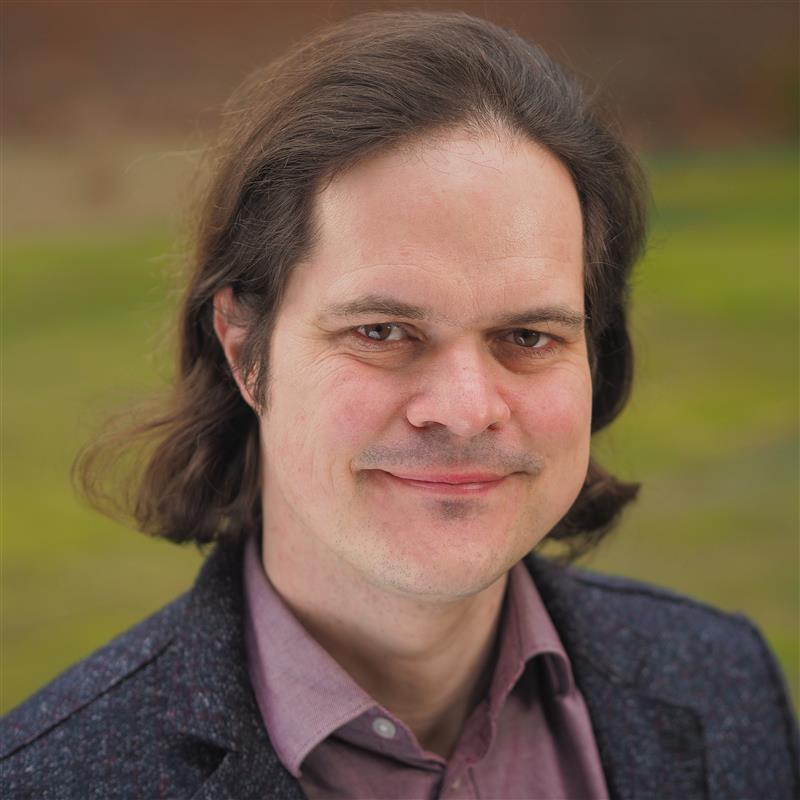
Josef Schlittenlacher is an Associate Professor at University College London (UCL), where his research focuses on computational models of auditory perception and machine learning, who is known as a developer and co-author of the ISO 532-3 loudness model. Josef studied engineering at the Technical University of Munich, where his growing interest in psychoacoustics led him to pursue a PhD in psychology. His research career has included positions at TU Darmstadt, Seikei University in Tokyo, the University of Cambridge, and the University of Manchester. His work bridges engineering, psychology, and data-driven methods to advance the understanding and prediction of human auditory perception.